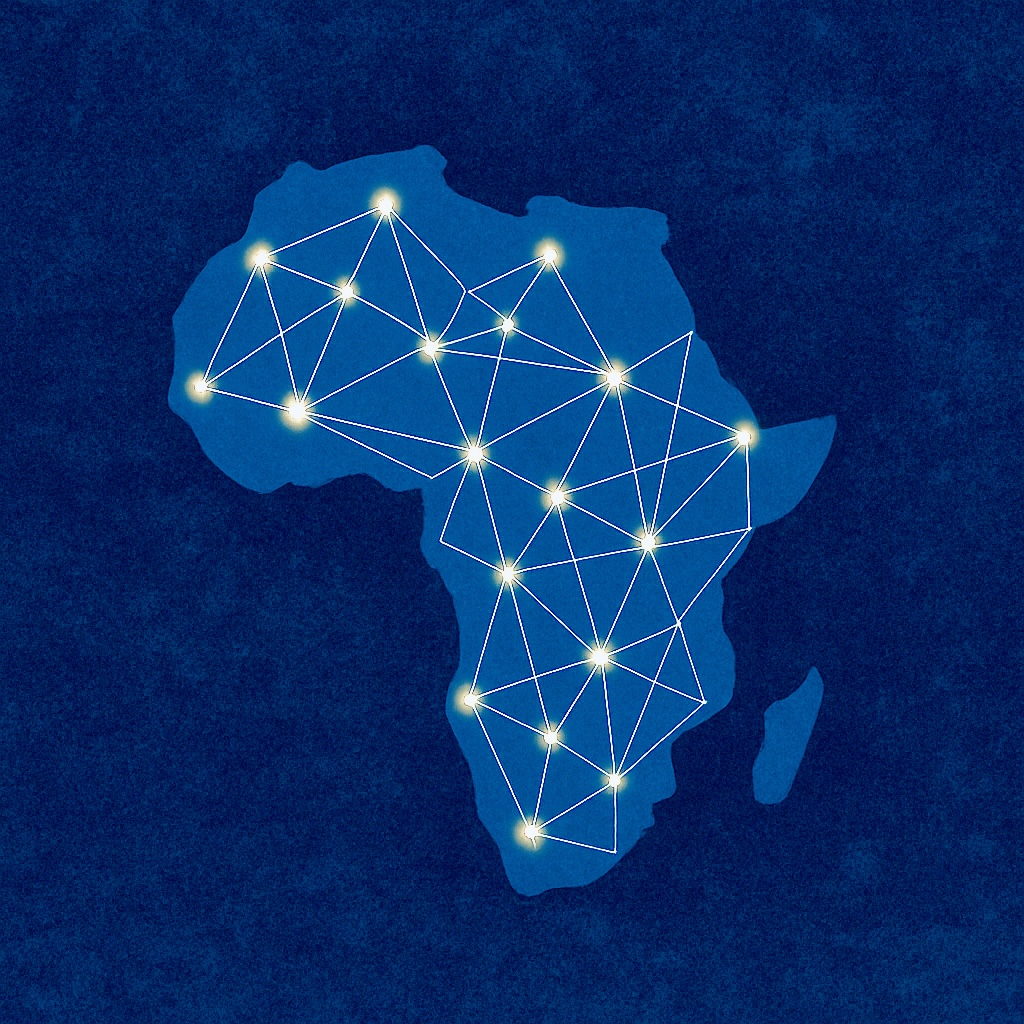
I consider myself privileged to be in conversations with trailblazing African technologists, policymakers, designers, and community builders. These conversations are sharpening a question that’s been echoing in my mind: What if our seemingly scattered efforts are actually the emergent nodes of a continental system we haven’t recognized…. yet?
Global narratives often frame Africa as a lagging adopter that is working to close the gaps or bridge to global tech, rather than shaping it. But today’s data tells a different story:
- Investment in African AI startups hit $2 billion, with over 2,400 companies1 on the continent, of which 41% are early-stage AI ventures.
- A recent McKinsey report2 emphasizes that Gen‑AI presents an opportunity for Africa to leapfrog traditional development stages and not chase them
The true narrative is that Africa is not lagging. We are taking leaps in ecosystems, strategy, and scale. For instance in cities cities like Nairobi, Lagos, and Cape Town, we’re seeing more than rise-ups, we are actually seeing clusters:
- Lagos, a powerhouse in fintech, is now one of the top emerging tech hubs globally, even amidst funding dips.
- Cape Town benefits from a “cluster effect”3 of elite universities and global networks producing globally competitive innovations.
I doubt that these are, isolated successes because they signal a node-dense ecosystem that is ready to operate as full systems. Additionally, African voices are already shaping how the world thinks about AI governance. You should read these to make the connections:
- A growing consensus from finance ministers to civil society: AI governing frameworks must be rooted in local priorities, not imported wholesale4
- Tech leaders like Chinasa T. Okolo5 and entities like Deep Learning Indaba are rethinking fairness, inclusion, and safety from an African vantage point.
These efforts point to one simple fact, governance can, and already is being reimagined from the ground up and not dictated from the top down which has been the prevailing narrative. I’ll share a few examples that come to mind right now of how AI is already transforming sectors tangibly across the continent:
- Smart agriculture in Kenya and Nigeria uses AI to boost yields for smallholder farmers.
- AI in urban services, like water and sanitation planning in eThekwini (South Africa), shows local systems thinking in action.
- Early gender-responsive governance emerged at the Kigali AI Summit, calling out job automation risks and asking African women to lead the AI-upskilling agenda.
Dear thought partner, these are not trial runs! They are locally optimized applications which have been intentionally designed for context.
For a systems thinker, these connections are visible right now. What I see clearly across borders and sectors in Africa, are:
- AI explorers (academics, engineers),
- Builders and skeptics (startups, platforms),
- Governance minds (policy labs, regulators),
- Community operators (NGOs, ecosystem stewards).
Together they form this beautiful constellation. But I also see that they are disconnected from each other, often invisible to the wider system, and of course seem to be non-aligned, because the narrative does not make their interconnectedness clear and easy to see.
👉 Here’s my ask: Let’s document it. Align it. Map it. Make it actionable.
What if we built a real-time map of African AI networks, policy connective tissue, and impact nodes? What if we started designing this infrastructure of intelligence, places, processes, rules, investment pillars, collaborations … together?
I would love to be deep in this work of;
- First mapping and aligning the African AI ecosystem, so that builders, regulators, researchers, and communities see themselves as part of a whole.
- Then doing so co-creation and community alignment for centering language, context, and lived knowledge in AI design and policy, not as localization, but as foundation.
This is the exciting work that will ensure that governance conversations in Kigali, Accra, or Windhoek are not the afterthoughts of tech policy, but the origin points of a new global model. What excites me is the possibility of connection and of building a deliberate, continent-wide system that is deeply African in its logic AND globally resonant in its ambition!
Yop Rwang Pam #SheThinks

 Project by Projects
You must be logged in to post a comment.