
There is a shift happening. You can feel it, even when it is hard to name what it is, outside your own industry.
For those of us working in global development, this shift goes deeper than tighter funding cycles or changes in donor language. The world that shaped much of development over the last few decades is becoming less stable or convincing, and less able to explain what is happening around us. Power is becoming more openly transactional. Climate pressure is intensifying. Artificial intelligence reshaping access, advantage, and voice. Institutions are under strain. Trust is uneven. Across many countries, organizations and leaders are still expected to navigate all of this within systems they did not design and agendas they do not fully control.
This is not a backdrop. It is the strategic environment.
At Project by Projects, this is the terrain I see many leaders trying to make sense of. You may be carrying serious responsibilities, responding to constant change, and trying to build work that matters without losing yourself inside other people’s priorities. You may be asking familiar questions: how do we stay financially afloat without becoming entirely donor-shaped? How do we lead through uncertainty without losing direction? How do we make decisions when the pressure to respond starts to overtake the discipline to think?
And beneath those questions comes this new one: how do you secure support without slowly allowing it to erode your integrity?
Anyone who has worked closely in this space knows how easily the work you set out to do, gets crowded out by proposal cycles, reporting demands, changing funder interests, and the ongoing labour of translation. Over time, organizations can become highly responsive and deeply busy, but less clear on what they are actually building.
This is where strategy becomes protection.
Funding will always matter. But the conversation is often too narrow. Diversification is not just about reducing risk on paper. It is about protecting your room to think, choose, and negotiate. It is about building enough clarity and resilience that support does not quietly become control.
That kind of strategy requires a different level of focus. It calls for more honest conversations about what sustainability really means. It calls for stronger internal structures that allow an organization to hold complexity without being overtaken by it. It calls for a clearer sense of what the work is, what it is not, and what should not be traded away in the process of keeping it alive.
There is a line from this to countries too.
Many states are navigating tight constraints shaped by aid, debt, trade, philanthropy, multilateral finance, and political pressure. External support can be helpful. It can even be catalytic. But it is never neutral. It comes with assumptions, incentives, and power. Sometimes these align with national priorities. Sometimes they distort them. Sometimes they create breathing room. Sometimes they quietly narrow the space for self-determination over time.
So just as organizational independence requires strategic clarity, national sovereignty has to become more than a slogan.
In this world order, sovereignty has to be strengthened through real choices: setting priorities, growing institutional capability, broadening the economic base, negotiating from a position of clarity, and resisting being shaped entirely by external pressure. None of that is easy, especially where fiscal stress, political contestation, unemployment, and climate vulnerability are all pressing at once. Independence without leverage comes at a cost though.
And that cost gradually shows up in policy choices made under pressure. Or in reforms that do not fully respond to the context. In the kind of confusion that eventually becomes the operating environment for organizations too.
So the question is not whether engagement with external systems should happen. It must. The real question is whether that engagement is building long-term bargaining power or quietly eroding it.
This matters because the forces reshaping the world are connected. Climate is not separate from finance. AI is not separate from inequality. Governance is not separate from infrastructure. Energy is not separate from geopolitical power. Yet much of the development sector still treats these as separate conversations, separate portfolios, and separate interventions. That fragmentation makes it harder to read the moment clearly. It prevents us from seeing how decisions in one area produce consequences somewhere else.
What this shift requires is a more integrated way of thinking.
It requires leaders who can read patterns, not just projects. Institutions and organizations that can tell the difference between motion and progress. Governments that understand that not every offer of support is strategic simply because it is available. It requires the ability to see when a funding opportunity strengthens the mission, and when it quietly disorients it.
That, for me, is where the most useful work now sits. No, not producing more reports and language about what is changing, but rather through helping people think clearly enough to respond to it. Helping institutions reconnect strategy to values, structure, and decision-making. Creating room for deeper questions about sustainability, power, and direction. And helping leaders walk the tight line between adaptation and abandonment.
You see, not every kind of flexibility is strength, because sometimes what we call agility can actually be over-accommodation. Sometimes partnerships are just dependency with better branding.
And yet, for all the uncertainty of this moment, I do not think it is only a time of risk. I think it is also a time of opening.
As old assumptions fall away, they create room for harder questions and more honest choices. An opportunity to rethink inherited models that are no longer working, and to build institutions and organizations that are less performative and more grounded in their actual realities, without losing the muscle of hope and innovation. They create room to insist that our countries, organizations, and communities should not remain permanent responders to external agendas.
There is an opportunity here for strategy that is rooted in context, dignity, and long-term value. But it will only matter if we use it well.
This is a moment for sharper choices. For institutions and leaders that know what they are building, and what they are unwilling to trade away. For clearer thinking that does not collapse into noise, even when the environment is unstable.
That is the work this period is asking of us.
And I suspect it is where some of the most important conversations will need to happen next.
This is the time for Strategic Clarity
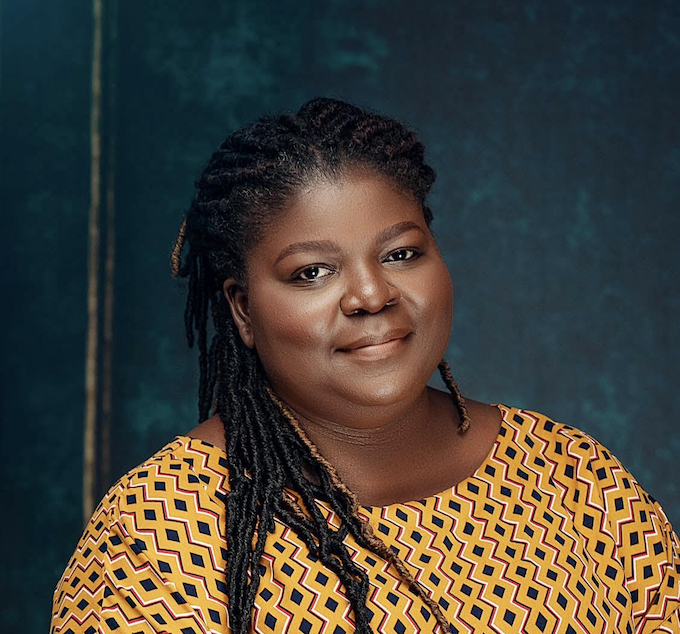
Yop Rwang Pam
You must be logged in to post a comment.